



Alex Lifeson has been around for what, fifty-something years now? Needless to say, the technology has come a long way since the teenager decided he wanted to make music for a living, against his parents’ wishes. Night and day.
This never stopped Rush’s guitarist from being one of the most preeminent, creative and experimental musicians of all time.
I wanted to write an article tracing the gear Lifeson used for this or that album, how he got those weird effects on 2112, what the secret behind the flanger on The Spirit of Radio was. But let’s face it, it’s already been covered in detail all over the internet. So instead, I figured it would be more interesting to talk about the present.
First, a look into the past
Rush started their career in the 1970s and turned the then-niche genre “progressive rock” into something popular. As Marty would say in Back to the Future, “Your kids are gonna love it.” Rush released 19 studio albums and sold over 40 million records worldwide.
The lineup was Geddy Lee, Alex Lifeson and Neil Peart. The three of them are unquestionably among the most influential musicians in their genre, respected by all. Rush documented their career extensively, with numerous live DVDs and Blu-rays. The three friends have also stayed busy individually, each with their own solo achievements: some as writers, others with solo albums, and so on.
Rush’s last studio album is Clockwork Angels, a very solid project packed with great ideas. Rush’s last official tour was the R40 Live Tour, which was also a resounding success.
Rush’s revival
After Neil Peart’s passing in 2020, Rush faded out of the music industry, giving out almost no news about the band. And that’s understandable; the trio had spent more than 40 years travelling the world together, success after success. It’s probably no less painful than losing a member of your own family, I’d guess.
However, in 2025, the band made an announcement that nobody would have dared hope for. The “Fifty Something” tour was born. More than 80 dates all around the world, this time with the talented Anika Nilles behind the kit.
Alex Lifeson’s Pedalboard
There’s something worth sitting with here: playing through fifty years of material, night after night, across eighty-plus shows, is a very different physical undertaking at this point in a career than it would have been back in 1976. Chasing a new tone used to mean hauling another amp head, another cabinet, another tech to carry it all. Now it means opening a menu.
That shift says a lot about what’s actually sitting at Alex’s feet on this tour. A single modern pedalboard can recall a cranked Marshall plexi, a clean Fender-style tone, and a chorus-drenched ’80s wash in the same song, at the push of one footswitch, without a single tube amp on stage. It’s less about chasing trends and more about being able to sound like every era of Rush, every single night, without touring with the truck they needed in 1981.
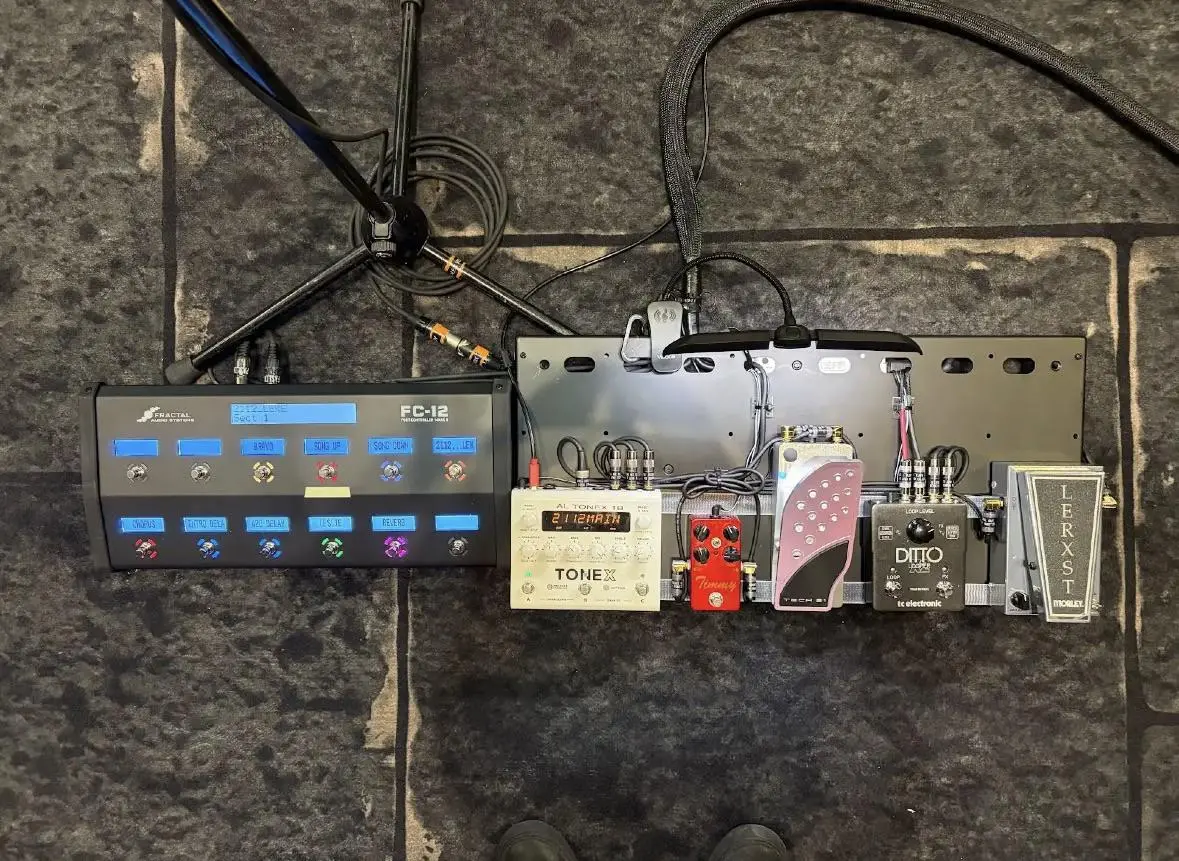
Alex Lifeson’s pedalboard leaked in a recent Reddit post. It was reportedly shared by his roadie with IK Multimedia, and from there (thanks to the magic of the internet) it found its way onto Reddit. Understandably proud that the guitarist is using one of their best-selling pedals, IK Multimedia jumped into the comments and confirmed all the details themselves.
Let’s go through the six pedals we can see on the board.
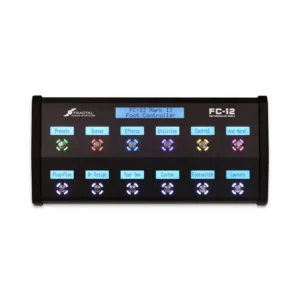
Fractal Audio Systems
FC-12 MARK II
The FC-12 gives Alex instant access to dozens of presets, scenes, and effects without having to tap-dance between individual pedals. Rush's songs often call for dramatic shifts between pristine cleans, layered delays, choruses, and high-gain leads. Live, that's exactly what a MIDI controller like this is for.
For context: the FC-12 is Fractal Audio’s foot controller for their Axe-Fx III, FM9, and FM3 processors, connected via a single XLR cable that also carries two-way communication with the unit. It has twelve silent footswitches, each with its own mini display, plus a central screen showing whatever preset or scene is active. One tap can recall an entire rig (amp, cab, effects) or you can assign individual switches to control specific blocks like delay or drive on the fly.
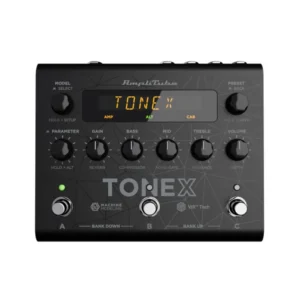
IK Multimedia
TONEX Pedal
TONEX means Alex doesn't need his real amps anywhere near the stage to still sound like himself. It captures the actual gear once, then reproduces it. Same clean tone, same driven tone, every single night.
For context: TONEX is IK Multimedia’s amp-and-cab modeling system, built around what they call AI Machine Modeling, technology that captures a real amp, cabinet, or pedal by feeding it a specially prepared guitar signal, then trains a neural network to reproduce that exact tone. The hardware TONEX Pedal is a triple-footswitch stompbox that stores up to 150 of these Tone Models on board, alongside a noise gate, EQ, compressor, delays, modulation, and reverb, so a full rig can be recalled without a laptop in sight. Players can pull from IK’s library of over 1,000 factory-captured amps, or download user-made captures from ToneNet.
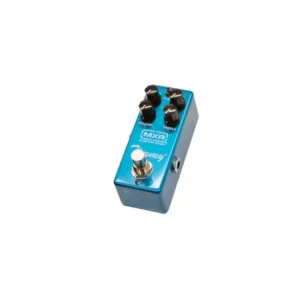
MXR
CSP027 Timmy Overdrive
The Timmy adds gain and sustain without stepping on the guitar's own tone. It doesn't smear his chord voicings the way a lot of overdrives do, which matters when the rhythm parts are this dense. Same pedal covers his solos too, just pushed harder.
This compact overdrive built by Paul Cochrane, credited as one of the pedals that kickstarted the whole “transparent overdrive” category, is built to add gain and sustain without stamping its own coloration onto the amp’s tone. Unlike most basic overdrives with a single blended tone knob, it splits EQ into separate Bass and Treble controls (Bass cuts lows before distortion, Treble cuts highs after), alongside Gain and Volume, plus internal dip switches for extra gain or asymmetrical clipping modes.
TECH 21
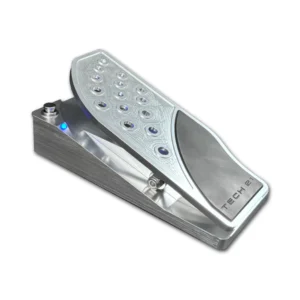
Killer Wail V2
Alex has used wah effects throughout Rush's career, and the Killer Wail gives him that same vocal, expressive sweep, easy enough to ride live for a solo or just to accent a phrase without overthinking it.
The pedal uses a light sensor instead of a potentiometer, which wears out over time. Any noise the pot would eventually introduce is gone entirely. Instead of the band-pass and low-pass filters most wah pedals rely on, the Killer Wail V2 runs a custom-built filter that shifts both frequency and Q (the width of the sweep) based on where the treadle sits.
It’s a genuinely excellent wah. Rugged, reliable, and that custom frequency-and-Q filter is what gets it closest to the vocal character of a vintage wah, without giving up the durability of a modern pedal.
TC Electronic
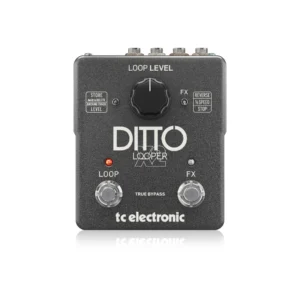
Ditto X2 Looper
It's hard to guess exactly why he'd need a looper, cause Rush was never really a looping band. I'd guess the Ditto X2 lets Alex layer parts, build ambient textures, or sketch out ideas during rehearsals and soundchecks. Or maybe it's for one crazy solo that I'm unaware of.
Ditto X2 is TC Electronic’s step up from the original single-footswitch Ditto, adding a second footswitch, stereo ins and outs, and up to five minutes of recording with unlimited overdubs. Dedicated buttons handle stop, undo/redo, and two built-in loop effects (reverse and half-speed) so players can layer and reshape loops in real time rather than just stacking one recording on top of another. It also runs true bypass to keep the dry signal uncolored when it’s off, and offers USB import/export for pulling loop ideas into a computer.
![Lerxst Power Wah Volume [ATWAS]](https://otogear.jp/wp-content/uploads/2026/07/morley-atwas-1-300x300.webp)
Morley
Lerxst Power Wah Volume [ATWAS]
Co-designed with Alex himself, the ATWAS combines optical wah and volume into a single pedal. Switchless operation means smooth transitions and expressive swells, with the same wah tone heard throughout Rush's catalog.
This pedal features Morley’s optical wah circuit with an optical volume control in one enclosure, plus an onboard boost that adds up to 20dB of gain in wah mode. Because it’s optical rather than mechanical, there’s no pot to wear out and no click when the wah or volume kicks in. Instead, there is just a continuous sweep controlled entirely by the position of the treadle, with no footswitch needed to turn it on or off. It’s housed in a cold-rolled steel, chrome-finished enclosure with a glow-in-the-dark treadle grip for visibility on a dark stage, and made in the USA as a limited run.
The Fifty Something tour… in video
The band still delivers a performance that’s every bit as sharp as it was thirty years ago. Sit back, relax, and enjoy the show.